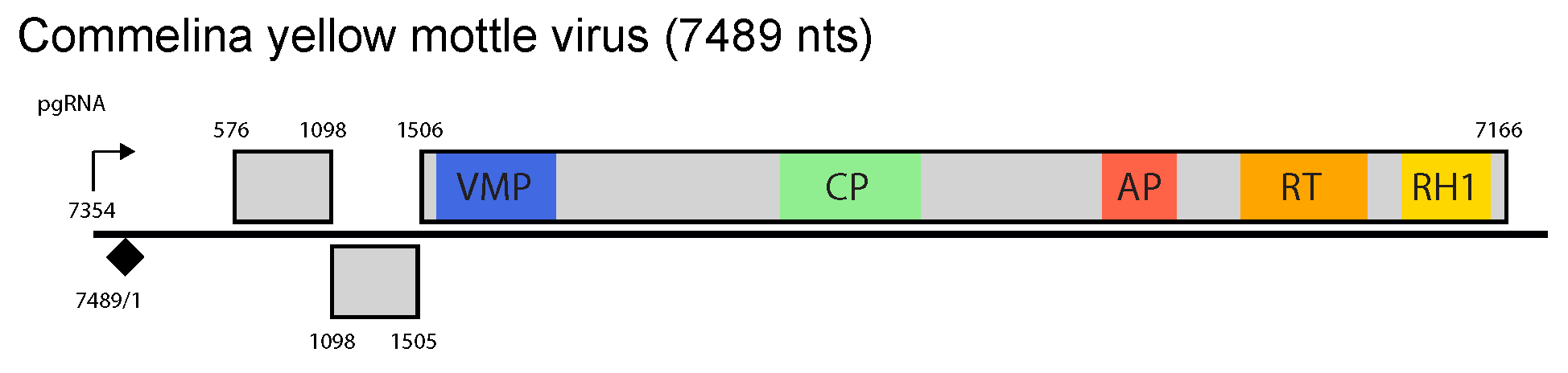
Badnavirus is a genus of viruses, in the family Caulimoviridae order Ortervirales. Plants serve as natural hosts. There are 74 species in this genus. Diseases associated with this genus include: CSSV: leaf chlorosis, root necrosis, red vein banding in young leaves, small mottled pods, and stem/root swelling followed by die-back. Infection decreases yield by 25% within one year, 50% within two years and usually kills trees within 3–4 years.
Taxonomy
The genus contains the following species, listed by scientific name and followed by the exemplar virus of the species:
Structure
Viruses in Badnavirus are non-enveloped, with bacilliform geometries. These viruses are about 30 nm wide and 90–900 nm long. Genomes are circular and non-segmented.
Life cycle
Viral replication is nuclear/cytoplasmic. Entry into the host cell is achieved by attachment of the viral proteins to host receptors, which mediates endocytosis. Replication follows the dsDNA(RT) replication model. DNA-templated transcription, specifically dsDNA-RT transcription is the method of transcription. The virus exits the host cell by nuclear pore export, and tubule-guided viral movement. Plants serve as the natural host. The virus is transmitted via a vector (cssv: mealybugs). Transmission routes are vector, mechanical, and seed borne.
References
External links
- Viralzone: Badnavirus
- Genus: Badnavirus - Caulimoviridae - Reverse Transcribing DNA and RNA Viruses - International Committee on Taxonomy of Viruses (ICTV)